



GREEN BAY (NBC 26) — As the NFL heads into its most important games of the season, injury lists are getting longer, not shorter.
Across the league, a bigger question keeps surfacing: Why are today’s best-conditioned athletes still getting hurt?
WATCH THE WHOLE BROADCAST STORY HERE:
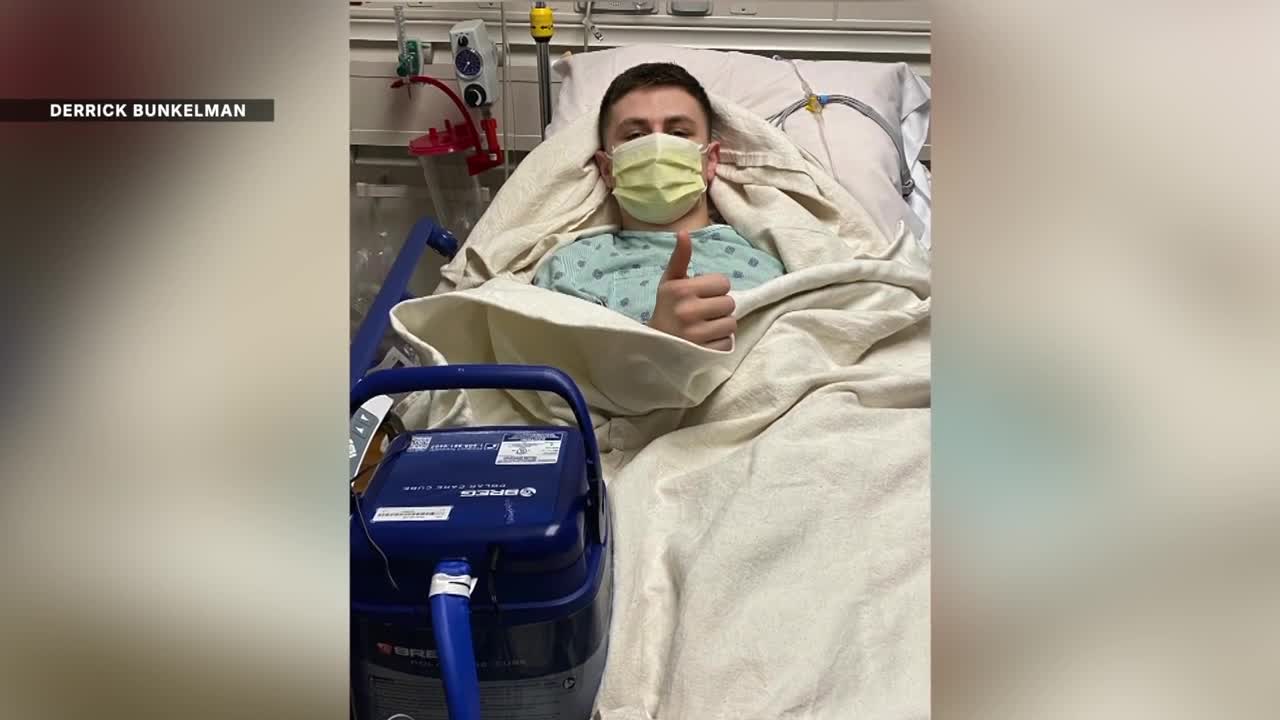
“It was a freak accident … non-contact. My knee just caved in and just tore my ACL,” said Derrek Bunkleman, a Drake University linebacker and De Pere High School alumnus.
Before his college football career even began, Bunkleman tore his ACL while still at De Pere High School.
“I was devastated,” Bunkleman said. “I was like, ‘How am I gonna come back from this?’”
In today’s professional athletes, experts say, we don’t have a toughness problem... It’s a physics problem.
“We’ve put our emphasis on faster, quicker, more powerful,” said Scotty Smith, Performance Coach and Owner of Synergy Sports Performance in Green Bay. “But how do we control those things? So I’ve always used that explanation of like we put the bigger engine in a nice car, but we don’t address the tires and the brakes.”
And when that car has to stop, something has to give.
As athletes get bigger and faster, non-contact injuries have become more common, according to the National Academy of Sports Medicine.
“In a non-contact ACL injury, the foot is planted, there’s no contact,” said Dr. Abbey DeBruin, an orthopedic surgeon at OSMS Green Bay. “The tibia shifts forward on the femur. That pivoting motion puts strain on the ACL. In some cases, the force and the strain overcome what the ACL is able to endure, and that’s when an ACL rupture can happen.”
That’s why experts say injury prevention today is more than just fixing what’s broken. It’s about managing workload and recovery.
“These guys aren’t getting the one-on-one attention you think that they are,” Smith said. “There’s just not enough people to go around.”
And even when injuries are repaired, timing matters.
“With an ACL reconstruction, the graft somewhere around the three to four month mark is probably actually at its weakest point,” Dr. DeBruin said.
Athletes are starting to feel a lot better and want to potentially be more involved in sport, but the graft is at a more vulnerable point for re-rupture. Dr. DeBruin says that oftentimes it’s 9 months or more before athletes are recovered enough to return to peak performance.
As the NFL looks for its next edge, Dr. DeBruin and Smith say the teams that rethink how they protect their athletes may shape the future of the game.
“We grew up in this world that we think more is better,” Smith said. “And I’m always under the assumption that more isn’t better. Better is better.”
The question now isn’t whether injuries are part of the game. It’s how much of the game they have to be.
