

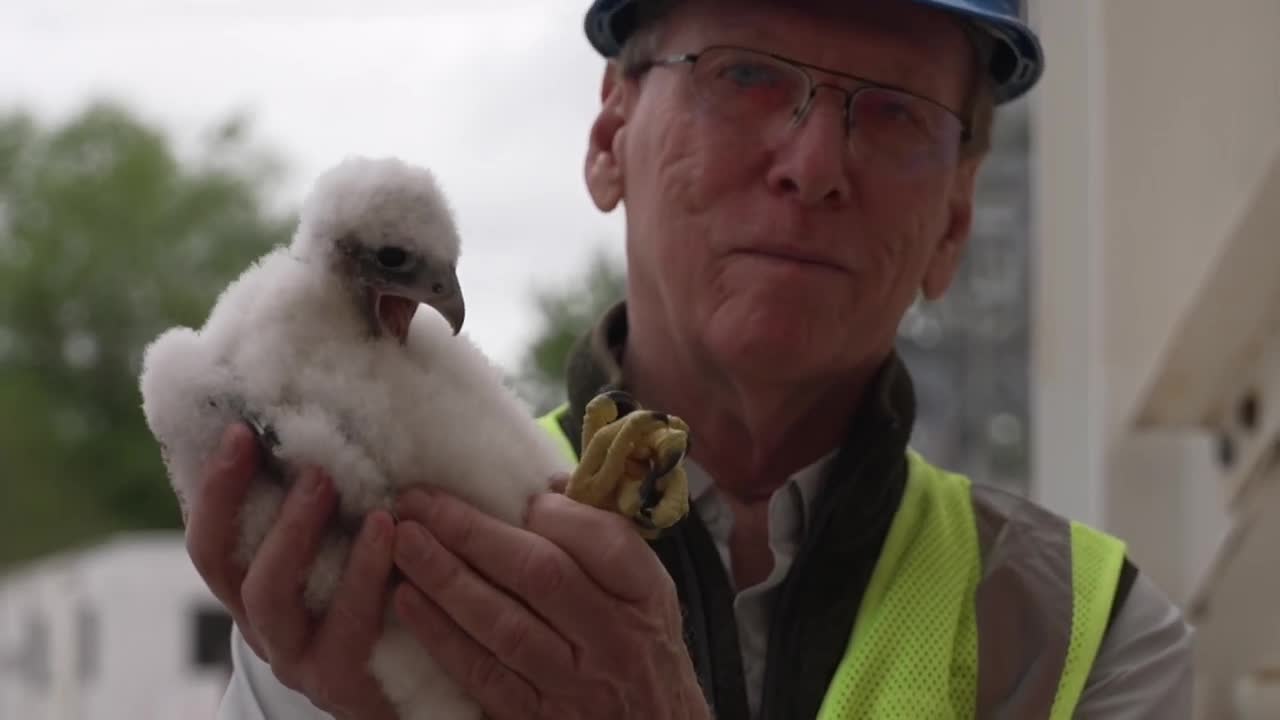


MENASHA (NBC 26) — Three peregrine falcon chicks have hatched at Essity in Menasha, marking the latest milestone in a decades-long conservation effort to restore the species to Wisconsin skies.
Watch the full broadcast story here:
The Wisconsin Peregrine Falcon Recovery Project climbs to nests, tags chicks, and tracks a bird that once vanished from the state. Danny Erickson is a biologist and a volunteer with the project.
He said healthy peregrine populations signal a thriving ecosystem.
“Peregrine are really important, they are top predators on the landscape, and so by having a nice predator at the top, we know it’s a healthy food chain,” Erickson said.
In the 1970s, peregrines were on the edge of extinction. Pesticides like DDT thinned their eggshells, causing populations to collapse across the country. The species was delisted in 1999.
“They are doing better than they were,” Erickson said.
Erickson said that recovery is possible in part because of nesting sites like the one at Essity in Menasha.
Aimee McClure, environmental manager at Essity, said the relationship between the company and the falcons benefits both.
“They help us as much as we help them. We do have other birds in the area that can cause havoc, so they help us with them, and we provide a nesting box that is safe; it’s a nice partnership between them and Essity,” McClure said.
The Essity Menasha Falcon Program is a long-running wildlife conservation initiative at Essity’s Menasha facility, operated in partnership with the Wisconsin Peregrine Falcon Recovery Project. Since the program began more than a decade ago—and with consistent nesting activity since 2014—the site has provided a safe habitat for peregrine falcons, combining environmental stewardship, employee engagement, and community interest.
Employees first noticed peregrine falcons nesting near the facility and began actively supporting their presence by maintaining a secure nesting environment. The site has since become a reliable location for raising chicks, contributing to the recovery of a species that was once endangered. More than 20 falcons have successfully hatched at the Menasha site over the life of the program.
After hatching, chicks grow under their parents' care on-site before learning to fly within several weeks. Because of the banding process, researchers can track their movements and migration, always knowing these young falcons began their journey in Menasha.
