

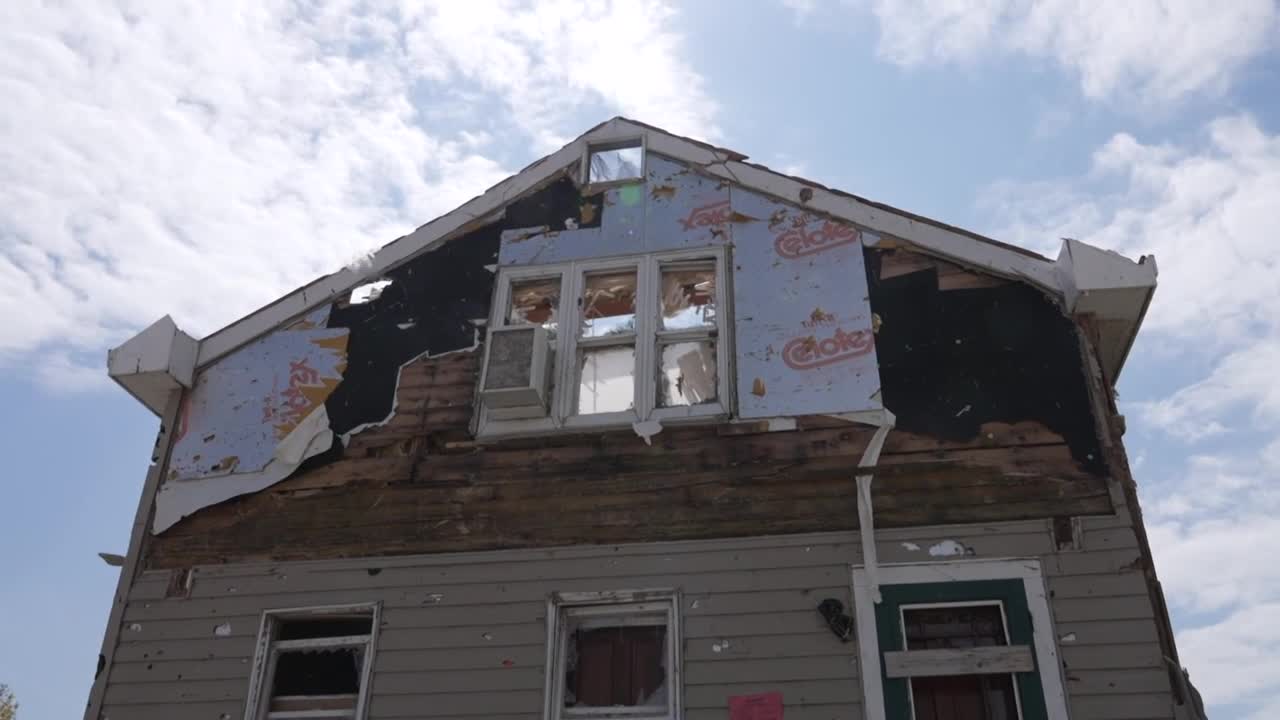


More than two months after a tornado tore through parts of the Fox Valley, federal assistance is now available to help residents still facing the financial costs of the storm.
For Greg Eisold, that recovery is far from over. The Doty Island resident is still unable to live in his home and has been staying with friends while waiting for repairs.
“It has been a long road,” Eisold said. “And it has just been a pretty slow road, to be honest, too.”
Now, he is seeking another source of help: FEMA.
Residents in Outagamie and Winnebago counties with eligible uninsured or unreimbursed losses from the July severe storms can apply for FEMA individual assistance. The program is available to homeowners and renters, according to Troy Christensen, a FEMA representative working on the Wisconsin disaster response.
Eisold applied Monday.
“It was really easy,” he said. “The website was very easy to navigate, pretty quick to do. I think it took me, like, less than five minutes to get done.”
Watch the full broadcast story here:
How to apply for FEMA assistance
Christensen said the first step is registering with FEMA. The agency recommends applying online at DisasterAssistance.gov. Residents who would rather speak with someone can call FEMA at 800-621-3362 and have a representative walk them through the registration process.
“The best way to register with FEMA is actually through our website, DisasterAssistance.gov,” Christensen said. “People can log onto the website, upload some of their basic information and get that process started.”
After registering, applicants will typically receive a call from a FEMA inspector. Christensen said those calls are usually coming within a couple of days and inspectors are already working in counties covered by the disaster declaration.
The inspector will generally set up an in-person appointment, often at the applicant’s residence. During that process, inspectors can review damage to the home, receipts or other expenses, and insurance information.
For Eisold, the online application included questions about what was damaged and what kinds of assistance he needed.
What can FEMA help pay for?
FEMA assistance can potentially cover several types of disaster-related losses that have not already been reimbursed through insurance or another source.
Christensen said that can include basic home repairs, replacement in some cases, critical personal property, hotel expenses and rental assistance. FEMA considers each applicant individually to determine what assistance they may be eligible to receive.
“If a survivor has losses or damage that has not been reimbursed through insurance or through other means, definitely register for FEMA assistance,” Christensen said. “We look at each case individually and work with disaster survivors to determine what you may be eligible for.”
That individual review matters for people such as Eisold, whose recovery expenses extend well beyond one repair.
He said his home still does not have windows and part of the roof remains damaged. He expects to move into temporary housing arranged through insurance in November.
“We’re still sitting here, two and a half months out, still waiting for even just approval,” Eisold said of parts of the repair process. “I mean, I still don’t have windows and part of a roof.”
Already received help from a local nonprofit? You still qualify
One point FEMA wants to make clear is that receiving assistance from another organization does not necessarily prevent a storm victim from receiving FEMA assistance.
Federal law prohibits FEMA from paying someone twice for the same disaster-related expense.
“By law, we cannot duplicate benefits,” Christensen said. If a survivor receives funding for the same purpose from another organization, FEMA cannot provide another payment for that same purpose.
But that does not mean someone who received local assistance should assume they cannot apply.
For example, Christensen said if another organization helped pay a survivor's hotel expenses, FEMA could not reimburse those same expenses. However, that person could potentially be eligible for FEMA assistance for a different loss, such as repairs to their home.
Christensen said survivors may receive nonprofit assistance while still having other unreimbursed disaster-related losses.
“We just can’t duplicate some of those exact things,” he said. “Every survivor is different.”
FEMA encourages applicants who have already received outside assistance to tell their inspector so the agency can account for that aid while reviewing the case.
Don’t assume an initial FEMA letter is the end of the process
Christensen said incomplete documentation is one of the most common reasons an applicant may initially not be approved. In some cases, FEMA will send a letter asking the applicant to provide additional information, such as insurance documentation.
“If anybody receives one of these letters from FEMA, read the letter carefully and also submit that documentation so we can continue through the process,” Christensen said.
Once an applicant has spoken with a housing inspector, Christensen said some financial assistance through FEMA programs can arrive within days, though broader disaster recovery can take much longer.
For Eisold, any additional help would ease only part of a much larger financial burden.
“I’m sure the total cost of all of it is going to vastly outweigh what they’re able to supply, but at least it helps a little bit,” he said.
He described the assistance from local organizations, friends, insurance and potentially FEMA as pieces helping him move forward through a recovery that is nowhere near finished.
“There’s a long road ahead,” Eisold said, “and there’s a lot more money that’s gonna need to be involved."
The deadline for individuals with eligible uninsured losses to apply for FEMA assistance is Dec. 7.
What tornado victims should know
- Apply online: DisasterAssistance.gov
- Apply by phone: 800-621-3362. FEMA says applicants can speak with someone who will walk them through the process.
- After applying: A FEMA inspector will typically call to arrange an appointment and review the applicant’s damage, expenses and insurance information. Christensen said applicants are generally receiving that call within a couple of days.
- Already received nonprofit help? That does not automatically rule out FEMA assistance. FEMA cannot pay twice for the same expense, but other unreimbursed disaster losses can still potentially be eligible.
- Received a FEMA letter asking for more information? Read it carefully and provide the requested documentation so FEMA can continue reviewing the application.
- Application deadline: Dec. 7.
