

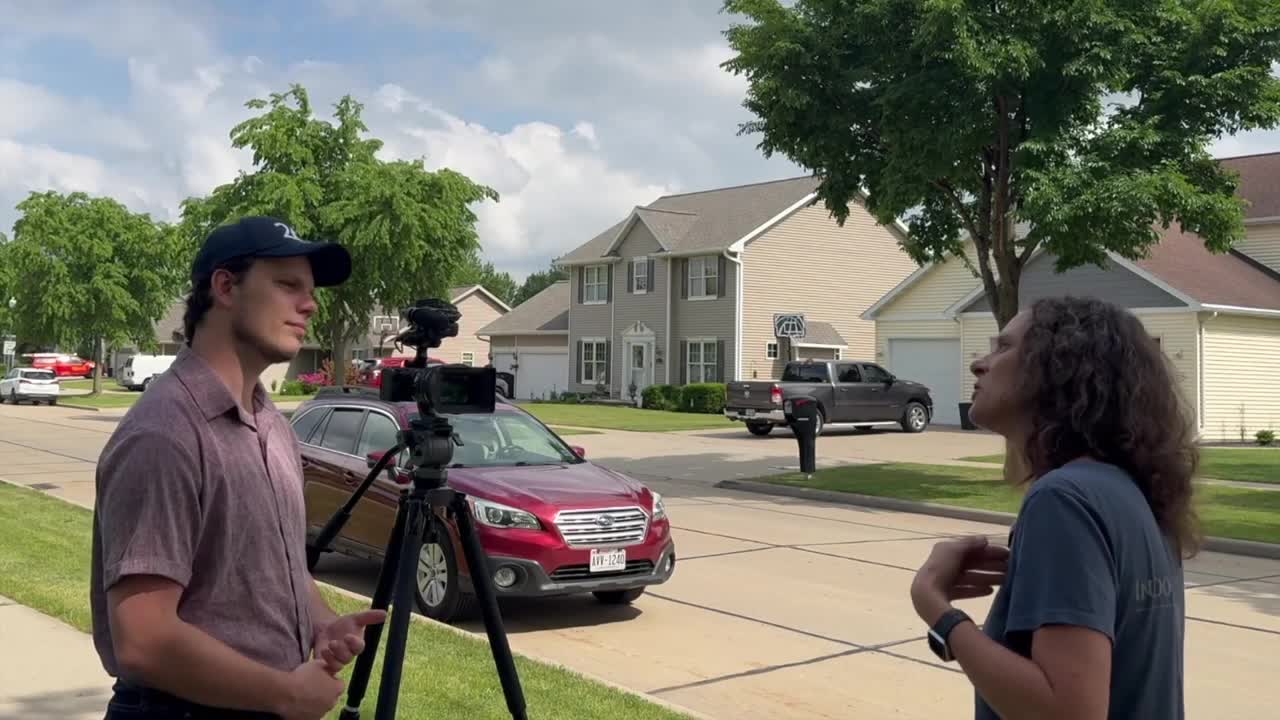


APPLETON (NBC 26) — Residents on Driscoll Street in Appleton are fighting a city plan to narrow their road, saying their street, a dead end, should get an exception to city policy.
The city plans to shrink Driscoll Street from 32 to 26 feet, limit parking to one side of the road, and add sidewalks. Under the plan, homeowners would be responsible for paying for the sidewalks — though the city has not yet given residents an exact dollar figure.
Watch the full broadcast story here:
Dawn Gilbert-Biechler, a neighbor that has been working to stop or amend the plan, said most residents are unprepared for the financial burden.
"95% of people don't know how they're going to pay for this on this street," Gilbert-Biechler said.
Fellow neighbor Jessica Betow said the timing and uncertainty of the costs are especially difficult for her family.
"I am widowed, my husband passed away five years ago from a massive heart attack, I have five kids, 12-2, this is a lot of money to have to come up with. And they haven't given us an exact amount yet," Betow said.
The changes are part of Appleton's standard process for streets in need of repaving. Sheri Hartzheim, chair of the Appleton Municipal Services Committee, voted in favor of the narrowing plan, saying it makes streets safer and more accessible. She acknowledged the financial impact on residents but said the city cannot ignore infrastructure needs.
"I do empathize because I know there are going to be some expenses to these folks, and that's an unfortunate thing. I just don't know how to reconcile because there's a problem now, we can't solve a problem down the road," Hartzheim said.
Some neighbors have argued that Driscoll Street's status as a dead-end road with a railroad at its end warrants an exception to the standard plan. Hartzheim pushed back on that argument.
"Yes it is a dead-end street and there is a railroad terminus at the end, but all other signs point to a standard city street that we should treat as a standard city street," Hartzheim said.
Not all council members agree. Alderperson Alex Schultz said exceptions can and should be made when appropriate, and that the financial strain on residents is a serious concern.
"Not a lot of residents are prepared to shell out 15-20,000 dollars to make these changes they didn't know were coming," Schultz said.
Schultz also warned that the issue extends well beyond Driscoll Street, as the city continues to repave and update aging infrastructure across Appleton.
"As we grow this program and continue to redo our streets and take care of some old infrastructure, lots and lots and lots of people will be dealing with changes in their neighborhood. Narrower streets, parking on one side, sidewalks, and they're going to have to cover the brunt of those costs," Schultz said.
Driscoll Street neighbors will have one more opportunity to make their case on June 17, before the Common Council takes up the matter for a final vote.
