

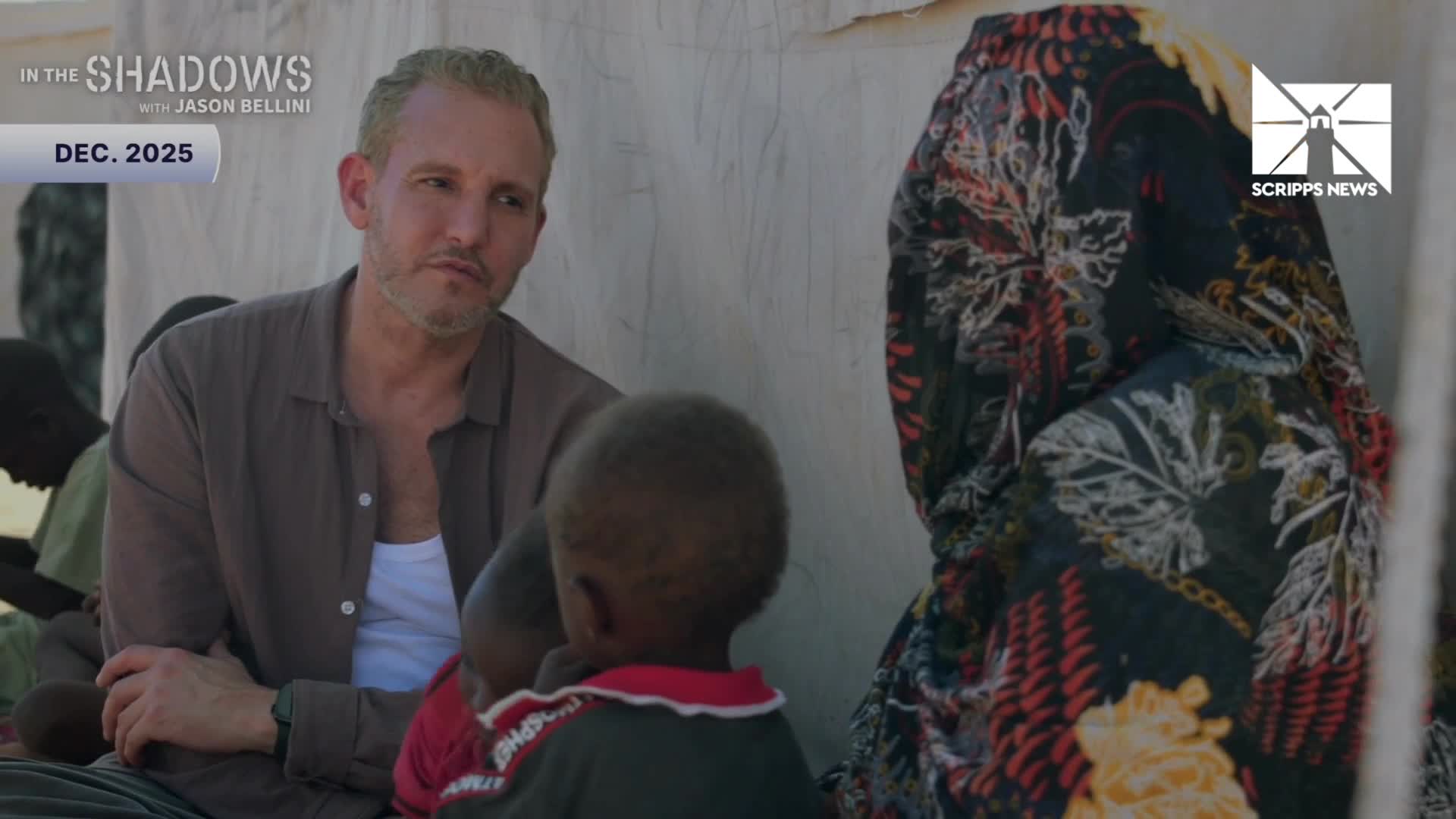


Sudan's humanitarian crisis is on the brink of a "catastrophe," the head of the World Food Program told Scripps News, warning that funding for the agency's operations in the country has been cut roughly in half even as the number of people going hungry keeps climbing.
Carl Skau, WFP's acting executive director, spoke to Scripps News Chief International Correspondent Jason Bellini within hours of crossing out of Sudan and into Chad, capping an eight-day trip that took him along front lines of the 2 1/2-year civil war between the Sudanese army and the paramilitary Rapid Support Forces.
"We have about half of what we had last year," Skau said.
RELATED STORY | UNICEF's warning from inside Sudan's next siege
The agency needs nearly $300 million to sustain its current operations in Sudan, where roughly 20 million people face hunger, 5 million are at emergency levels and 200,000 are in famine-like conditions, according to WFP. Fourteen million people have been displaced by the war.
In El Obeid, a city in central Sudan under RSF siege for 18 months, Skau said the agency has been forced to ration who it can help.
"The camps are completely overstretched, and the people I spoke to, I mean, they lack everything," Skau said. "So those who have been there longer, two or three years, we are not able to assist."
Drone warfare is adding to the danger of delivering aid. A WFP convoy headed to Dilling, in southern Kordofan, was struck two weeks ago, destroying two trucks, Skau said. The drivers were unhurt.
Rising fuel costs are straining the operation further. U.S. diesel prices have hit record highs this month, driven largely by the closure of shipping through the Strait of Hormuz amid the conflict between Israel and Iran, Russian attacks disrupting Black Sea grain routes, and threats near the Bab-el-Mandeb, outside Yemen.
"This is now pushing up fuel prices, pushing up food prices, which is not only putting more pressure on people who are already struggling to put food on their table, but also increasing the cost for our operations," Skau said.
IN CASE YOU MISSED IT | Inside Sudan's hidden genocide: Eyewitness accounts from the world's worst humanitarian crisis
The gap has widened since the Trump administration dismantled the U.S. Agency for International Development, which had covered nearly 44% of Sudan's humanitarian response before the cuts. The administration has argued other countries should shoulder more of the burden. So far, they largely haven't.
Skau plans to bring his findings to the United Nations General Assembly's high-level week, which opens in New York on Sept. 22.
"We just can't continue to fail these people," Skau said. "They deserve the basics."
