

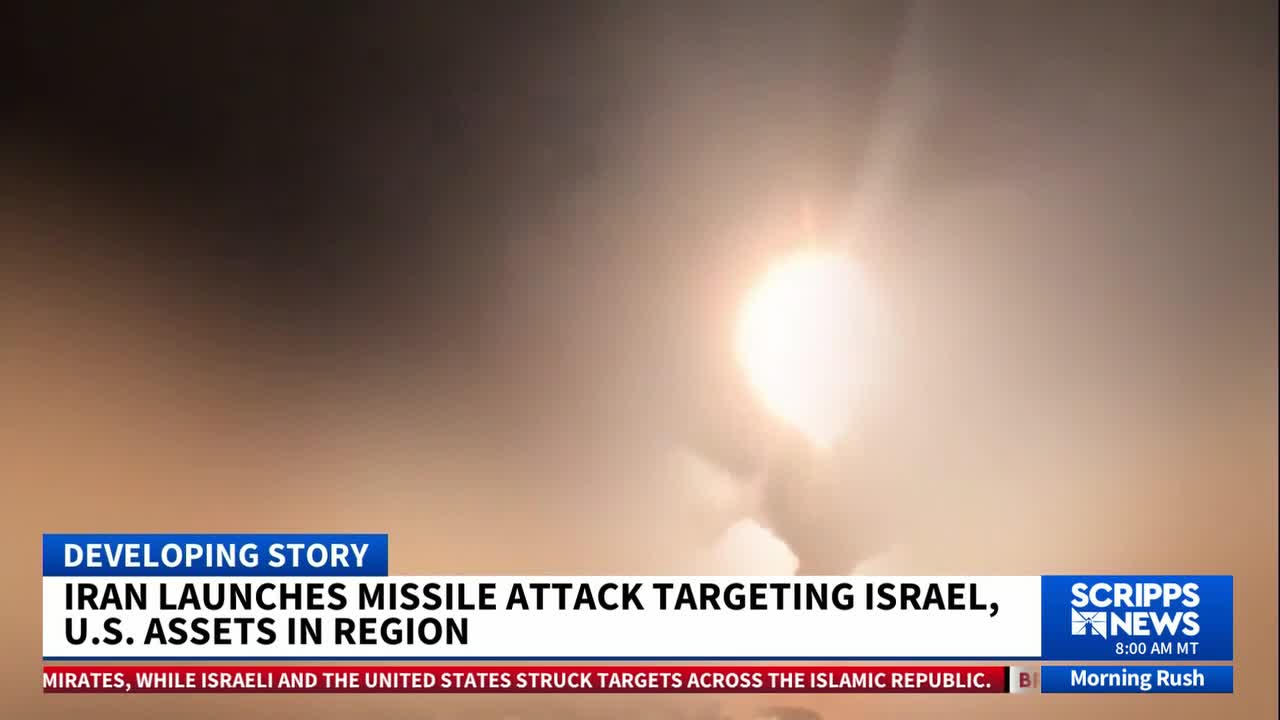


Iran launched what it called its most intense attack since being struck by the United States and Israel nearly two weeks ago, firing missiles overnight at targets in Israel and U.S. assets across the Middle East.
Iran’s paramilitary Islamic Revolutionary Guard Corps said the assault included long-range ballistic missiles.
The attacks extended beyond Israel. Two Iranian drones struck the perimeter of Dubai International Airport, the world’s busiest international travel hub, wounding four people. Officials said the injured included nationals from Ghana, Bangladesh and India. Air traffic control operations continued and the airport remained open.
RELATED STORY | Pentagon says about 140 US troops wounded in Iran war
Elsewhere in the region, Saudi Arabia said its air defenses intercepted six drones targeting an oil field. Kuwaiti authorities reported shooting down eight drones over their territory.
In Bahrain, officials said a residential building was struck, killing a woman.
Iran said it has launched nearly 1,500 drones at the United Arab Emirates since the conflict escalated, though officials say all but about 50 have been intercepted.
By targeting the U.S. partners, Iran appears to be attempting to expand the economic consequences of the conflict across the region.
Meanwhile, the Strait of Hormuz, a critical global shipping route, has effectively become a combat zone.
The United Kingdom Maritime Trade Operations agency confirmed Wednesday that three separate commercial vessels were struck by unknown projectiles.
RELATED STORY | New footage raises questions about who's responsible for deadly strike on Iranian girl's school
The most serious incident involved a Thai-flagged cargo ship that was hit near its stern, sparking a fire that forced the crew to abandon ship. Twenty sailors were rescued, while three remained missing.
The incidents followed a major preemptive strike by U.S. Central Command. Late Tuesday, U.S. forces destroyed 16 Iranian vessels believed to be capable of laying naval mines.
The operation was aimed at preventing Tehran from blocking the strategic waterway, which carries about 20% of the world’s oil supply.
President Donald Trump has warned Iran of military consequences at a "level never seen before” if mines are placed in the strait.
