

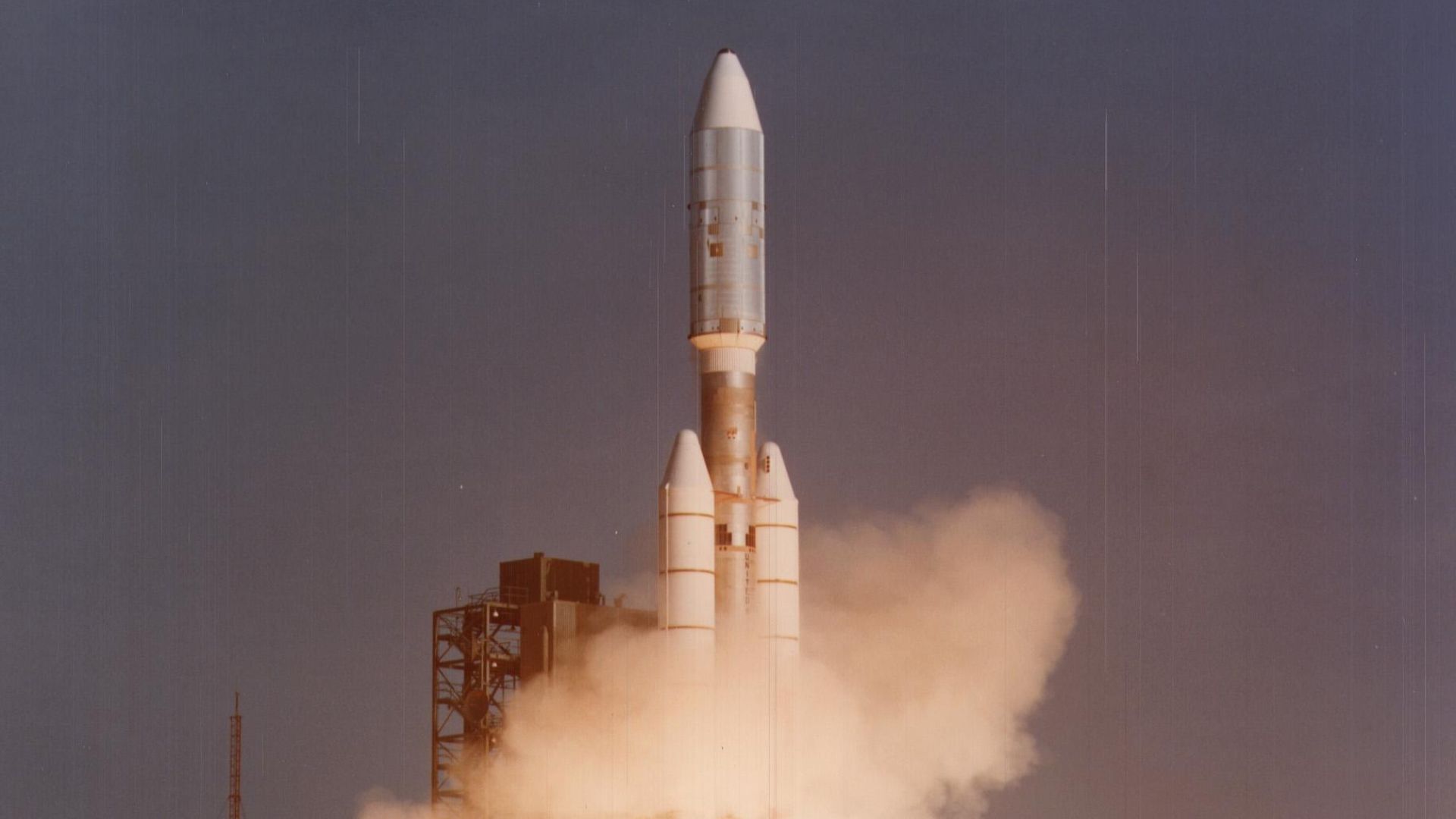


Nearly 50 years after leaving Earth, NASA’s Voyager 1 spacecraft has reached another historic milestone: traveling a full light-day away from our planet, farther than any other human-made object in history.
But what exactly does that mean?
A light-day is the distance light travels in 24 hours, or approximately 16 billion miles. Voyager 1 has traveled so far that a signal sent from Earth takes an entire day to reach the spacecraft.
RELATED STORY | NASA gives Voyager 2 a new lease on life nearly 48 years after launch
Launched from Cape Canaveral aboard a Titan III Centaur rocket in 1977, Voyager 1 continues to move farther into interstellar space at roughly 38,000 miles per hour.
And remarkably, the nearly 50-year-old spacecraft is still working. NASA continues to receive scientific data from Voyager 1, including measurements of magnetic field strength and direction, plasma density and pressure in the space surrounding the probe.
Voyager 1 has also given humanity some of its most extraordinary views of the solar system. During its journey, the spacecraft captured stunning images of Jupiter and Saturn before taking the now-iconic “Pale Blue Dot” photograph of Earth from beyond Neptune.
The image offers a humbling perspective of our place in the universe, showing Earth as a tiny speck against the vastness of space.
IN CASE YOU MISSED IT | Pluto flyby mission wakes up after long sleep nearly 6 billion miles from Earth
Voyager 1 is expected to continue its journey for years to come. At its current speed, it would take roughly 17,600 years to travel one light-year from Earth.
For now, its latest milestone is another reminder of how far human curiosity can take us — and how much more there is to discover beyond our own planet.
