



APPLETON (NBC 26) — As communities across the country weigh the costs of powering artificial intelligence through massive data centers, some creators say the technology boom is already benefiting from their work without permission.
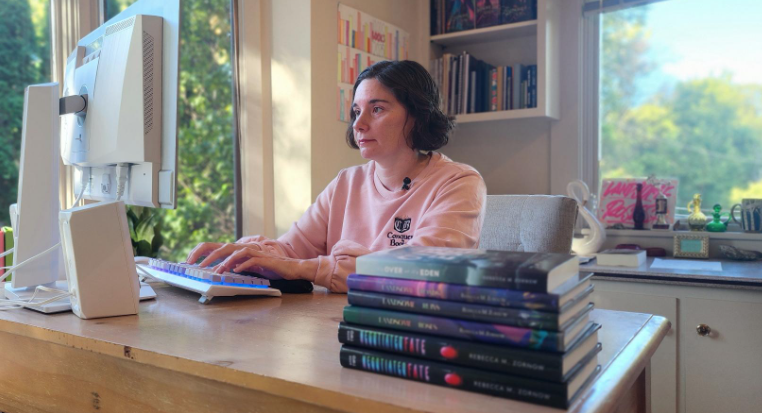
Appleton science fiction author Rebecca Zornow says she was stunned to learn Meta allegedly used her books to help train artificial intelligence systems.
“There’s really a disrespect for literature from these tech companies,” Zornow said. “They’re taking what they want from authors so that they can build their models and get paid without being held accountable to anyone else.”
Zornow published her first book in 2021, before the rapid rise of generative AI tools reshaped debates around copyright and creative ownership.
“Generative AI wasn’t even a question at that point,” she said.
Now, she says writers are being forced into a defensive position as lawsuits against major tech companies move through the courts.
“It is so surreal to feel like a company would be entitled to my work,” Zornow said.
Her newly released book, Lonesome Roses, includes a direct warning against AI use.
“Use of this publication to train artificial intelligence technologies is expressly prohibited,” the notice reads. “No AI has been used to create this story or its illustrations.”
Zornow believes current copyright laws are not keeping pace with emerging technology.
“I do think that current laws are failing writers,” she said.
The debate comes as communities — including Port Washington — continue discussions around large-scale data centers tied to the AI industry.
“The center of this warehouse is going to be rack upon rack upon rack of servers and computers,” Port Washington Mayor Ted Neitzke said during earlier discussions about proposed development plans.
At the federal level, officials are also expanding the use of AI tools in public operations. Transportation Secretary Sean Duffy recently highlighted new AI-assisted systems designed to support airspace management.
“This is a predictive tool that will give a prompt to a human, to someone who’s managing the airspace,” Duffy said.
But Zornow argues the rapid expansion of AI should not come at the expense of human creativity.
“We want real people creating artwork, writing books, generating things — not computers,” she said.
She hopes more authors will take proactive steps to protect their work before it is absorbed into future AI systems.
“What can we do upfront earlier that we weren’t doing earlier to make our stance really clear?” Zornow said.
Two major AI copyright cases expected over the next year could help shape the legal boundaries for how artificial intelligence companies use copyrighted material. A key ruling is expected in December, with a jury trial scheduled for the spring.
