

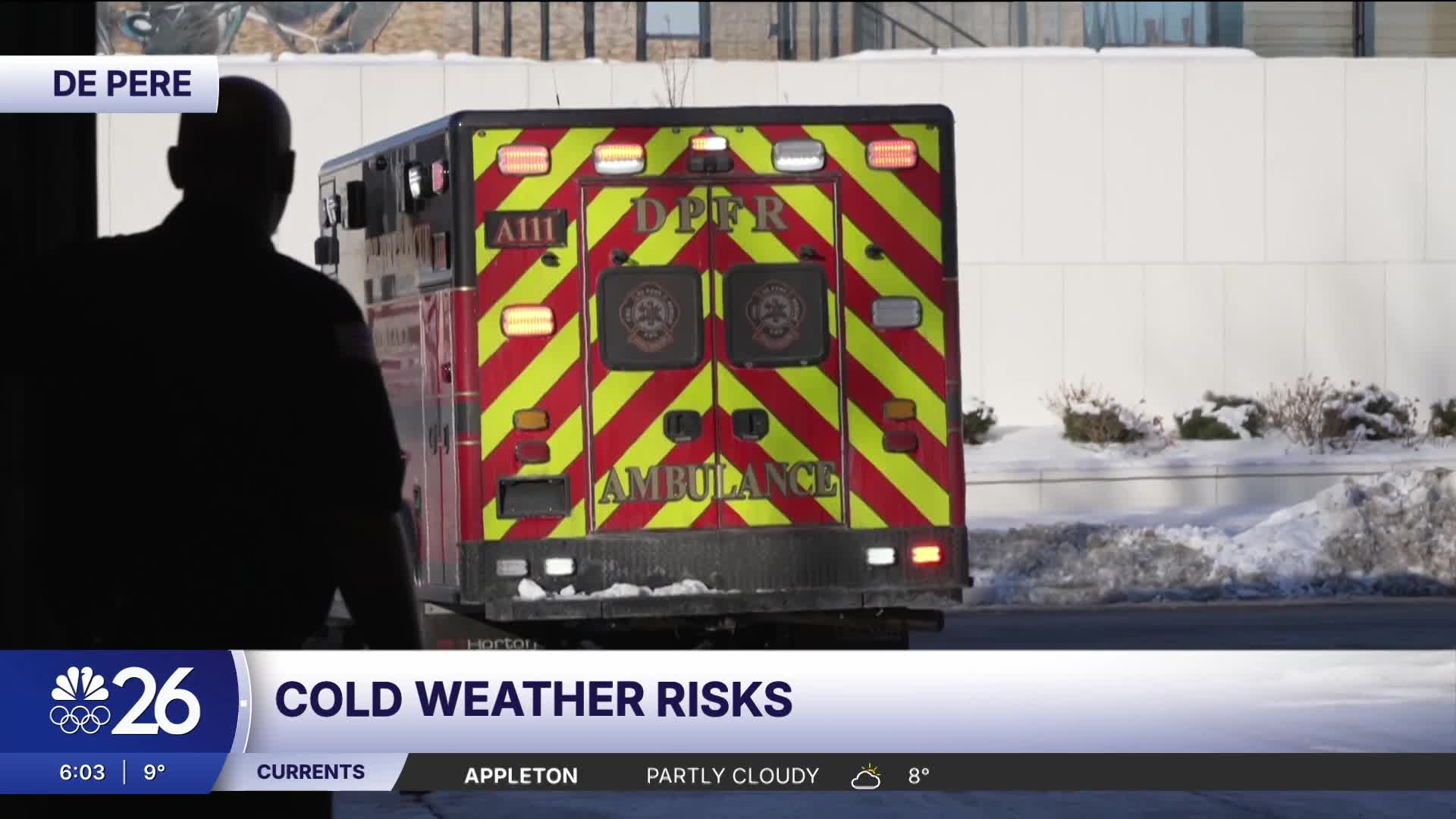

DE PERE (NBC 26) — As bitter cold settles over Northeast Wisconsin, fire departments are preparing for what could be one of the busiest stretches of the season. From medical emergencies to heating fires and carbon monoxide calls, local firefighters say extreme cold puts added pressure on both first responders and the people trying to stay warm.
At De Pere Fire Rescue, crews tell me cold snaps like this one tend to trigger a sharp rise in calls, often within hours.
You can watch the entire web video by clicking below:
“Anything can happen when temperatures drop this fast,” said Battalion Chief Daniel Gatz. “We see furnace malfunctions, carbon monoxide alarms, frozen pipes, hypothermia, slips and falls… even strains from shoveling. The cold increases risks across the board.”
State health data shows just how dangerous winter can be in Wisconsin:
- 96 cold-related deaths were recorded last winter statewide
- More than 1,300 EMS calls were linked to hypothermia, frostbite, and cold exposure
(Source: Wisconsin Department of Health Services)
Firefighters say many of those calls start with someone being outside for just a few minutes, unaware of how quickly frostbite or hypothermia can set in.
Carbon monoxide becomes a major concern during cold weather, especially as furnaces, fireplaces, and space heaters run nonstop.
According to Wisconsin DHS:
- About 500 residents end up in the ER each year with carbon monoxide poisoning
- Wisconsin averaged 21 CO-related deaths per year between 2016 and 2020
(Source: WI DHS - CO Poison Data)
“Your furnace gives off exhaust, and that exhaust contains carbon monoxide,” Gatz explained. “There’s no smell, no taste, the only way you know there’s a problem is if you have a working detector.”
National data shows heating equipment is most likely to spark a fire in the coldest months:
- Nearly half of all heating-related home fires happen in December, January, and February
(Source: National Fire Protection Association)
During extreme cold, space heaters, chimneys, and older furnaces are under extra stress, and that’s when firefighters see an uptick in calls.
Fire officials are urging everyone to take a few simple steps right now:
- Clear your furnace vent (Snow can block it in minutes.)
- Give space heaters three feet of clearance
- Never use ovens or grills to heat your home
- Check your carbon monoxide detectors on every level
- Limit time outdoors (frostbite can begin in as little as 10 minutes when wind chills plummet)
(Source: National Weather Service) - Check on neighbors who may have limited heat or transportation
“These are the days we take extra steps and put on extra staff,” Gatz said. “Extreme cold is dangerous, and we want people to treat it that way.”
With wind chills expected to fall even lower through the week, fire departments across Northeast Wisconsin say they’re preparing for an increase in emergency calls and are asking the community to stay vigilant.
Firefighters say a little preparation now can prevent a 911 call later.
