

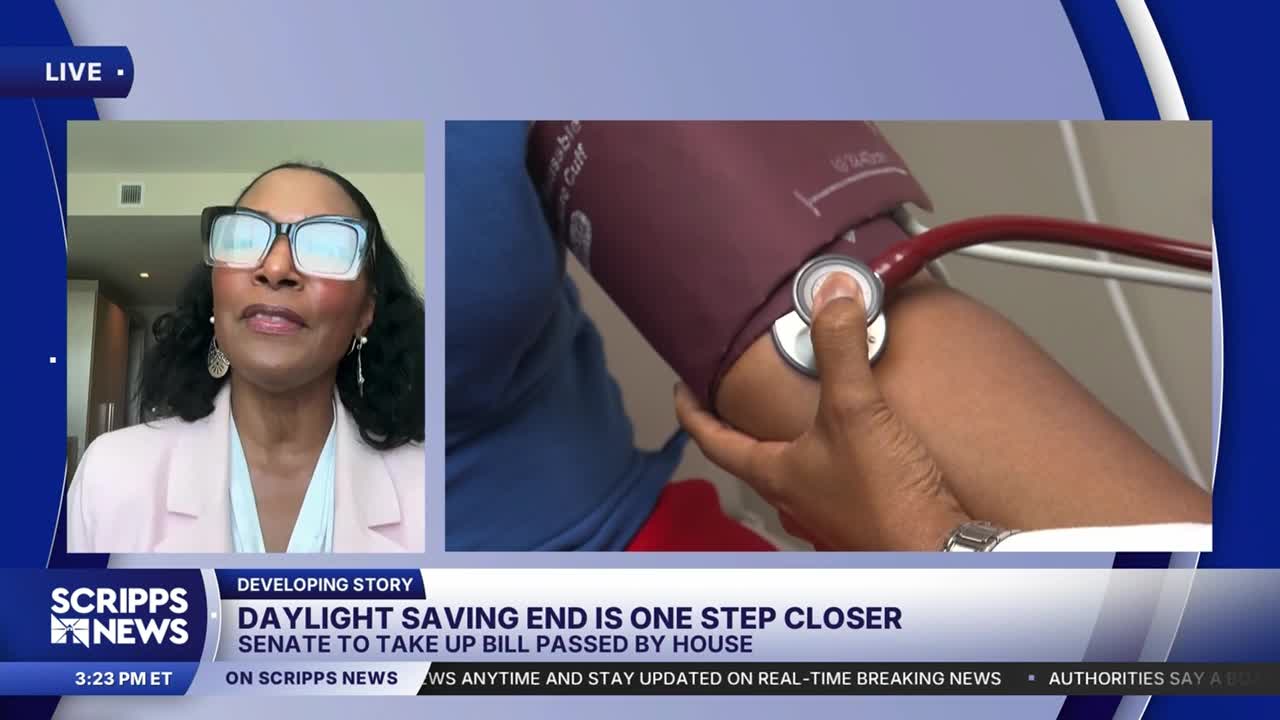


The House of Representatives voted Tuesday to make daylight saving time permanent. The vote to pass the Sunshine Protection Act was 308 to 117.
The bill is now on its way to the Senate. Passage means summer right now would stay as it is, with later sunrises and later sunsets. In winter, daylight would last longer into the evening.
Passage is not assured in the Senate, where some lawmakers still have concerns, such as the health and safety risks of changing daylight hours for commuters.
The changes to daylight can also affect internal rhythms, said cardiologist Dr. Jayne Morgan. She spoke with Scripps News about how the heart experiences DST.
"There is a link and is probably the opposite of what people think. And the link is actually when we spring forward in spring and we lose an hou," Morgan said. "We gain an hour of daylight, but we lose that hour in the morning. We actually do see an increase in heart attacks, especially during that first week. And that is because our bodies, based on millions and millions and millions of years of circadian rhythm, are in alignment with the rhythm, the natural rotation of the Earth."
However, it's also true that "People tend to be more active when we have longer days," Morgan said. "We tend to go out for walks. We tend to spend more time outdoors. We tend to engage in healthier behaviors. So this really is a yin and a yang between biology vs. behavior."
RELATED STORY | House passes bill to make Daylight Saving Time permanent
"When we look at daylight saving, we do see an increase in heart attacks in that first week that people move. And that's because we have a shift in the cortisol spikes and the melatonin spikes and your body becomes out of sync. It shows higher blood pressure, higher heart rates, higher rates of inflammation. All of that drives heart disease. But the flip side of the coin is people tend to engage in healthier behaviors when we have longer days."
See the full interview with Morgan in the video above.
